

Drill Bars Explained: Snatch Block, Steam Boat and the Types Wescon Makes
A drill bar is a bushing holder that clamps to the structure so a drill or reamer runs true through a hardened bushing instead of wandering across the hole. Aircraft mechanics call it a snatch block or a steam boat. You will also see it sold as a drill block or a drill bushing block. Different names, one job. It holds a bushing over a hole you don't want to drill freehand.
When you need one
Hole repair is the usual reason. A rivet hole was drilled crooked, or a fastener hole in a skin doesn't line up with the one in the frame under it. A mismatched hole, and the fix is what builders call pulling the hole. Drilled freehand, the bit follows the old hole. A drill bar holds a bushing over the hole so you can ream it oversize or clean it up and keep it on center.
The bar has a slot cut down its length. Draw clecos or bolts through the slot pull it tight to the part on neighboring holes. Slide the bushing along the slot until it sits over the target hole, then lock it down.
Slip bushing or threaded bushing
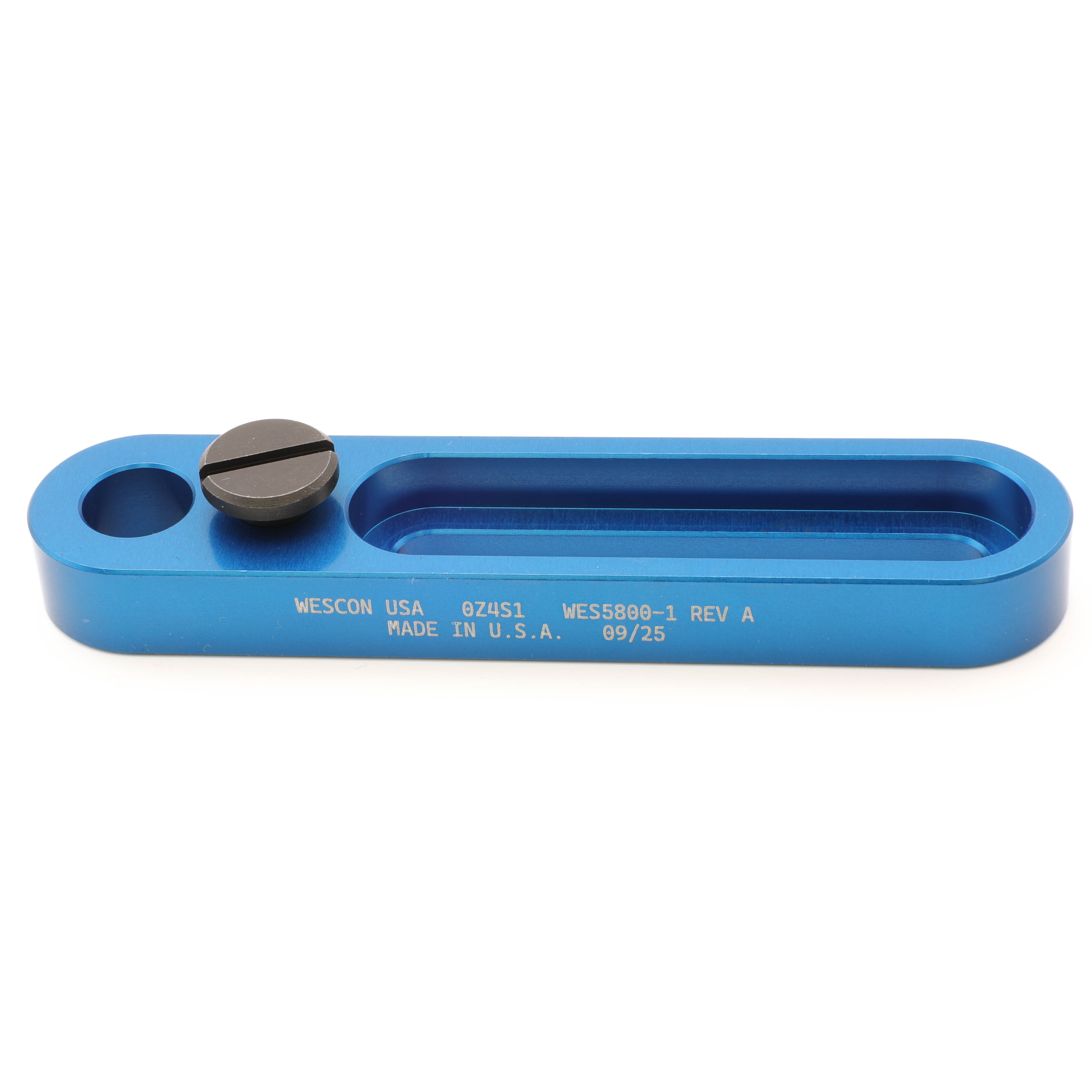
Most drill bars on the market take slip bushings. The bushing is a hardened steel liner, 1/2 inch or 3/4 inch outside diameter, that drops into the bar and is held by a set screw on the side (grub screw, in some catalogs). ANSI B94.33 calls these Type SF, slip/fixed renewable. The same SF bushing goes in an egg cup guide, a dog bone guide or a bushing plate, so a shop that already stocks a set can use it in the bar. Changing sizes means loosening the screw, swapping the bushing and tightening again. The screw is all that holds it, so check it. Wescon's WES5800 family takes these SF bushings in 1/2 inch and 3/4 inch.
Few drill bars on the market take threaded bushings, and Wescon's WES5900 family is one that does. WES5501 is 3/8-16, WES5502 is 1/2-13. The bushing screws in, so there is no set screw. Changing sizes takes a few turns instead of a slide, and threaded bushings do not fit SF holders, so they are a second set to stock unless your drill guides are already threaded. Wescon's WES5501 and WES5502 fit both the WES5900 bars and Wescon's threaded drill guides.
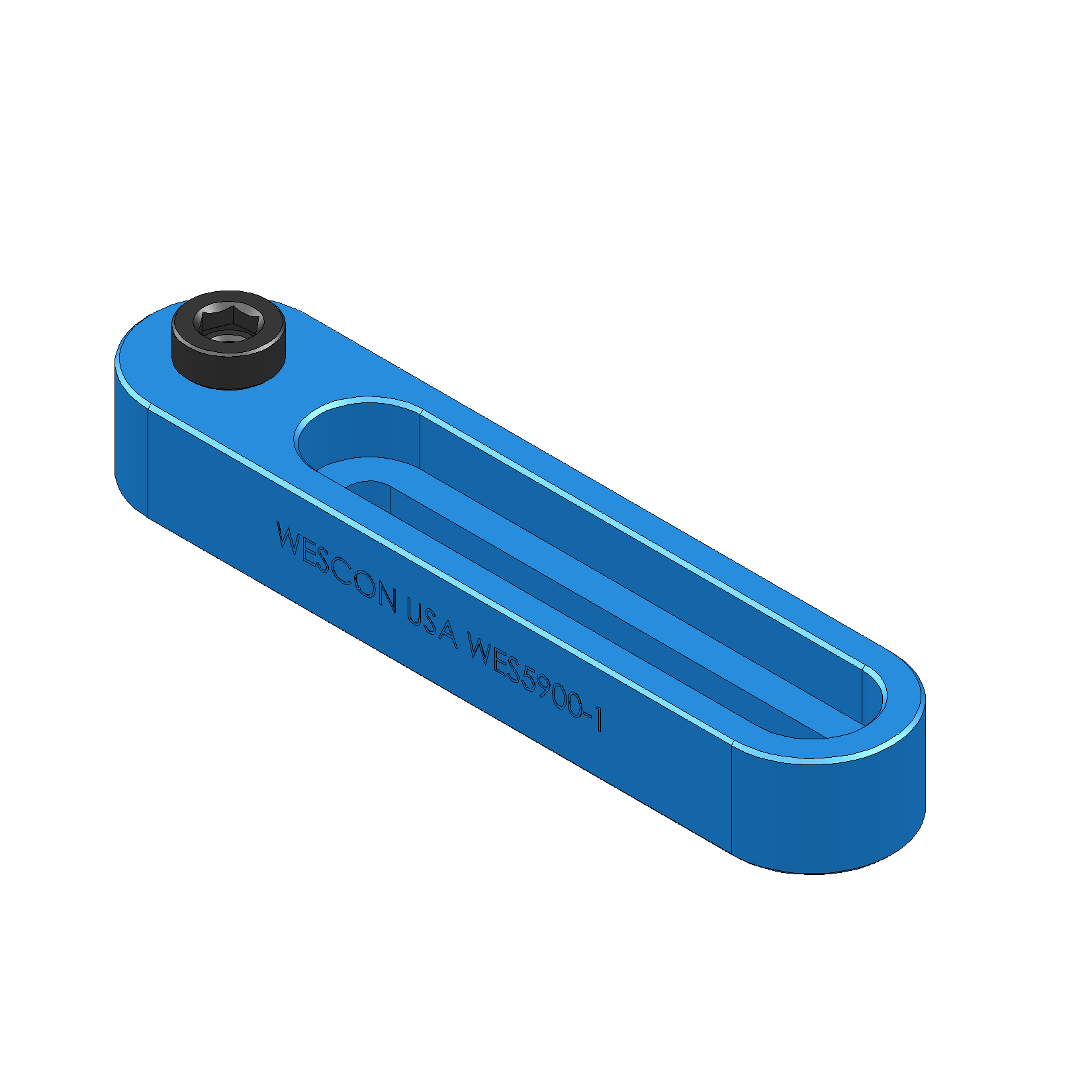
If your shop runs SF bushings in guides and plates, the WES5800 family uses what you have. If you run threaded bushings, or want a holder with nothing to tighten, take the WES5900 family.
Single ended, double ended and swivel head
Both families come in the same four shapes.
Single ended (WES5800, WES5900). Holds one bushing, ordered for a 1/2 inch or 3/4 inch slip bushing, or a 3/8-16 or 1/2-13 threaded bushing. The basic snatch block.
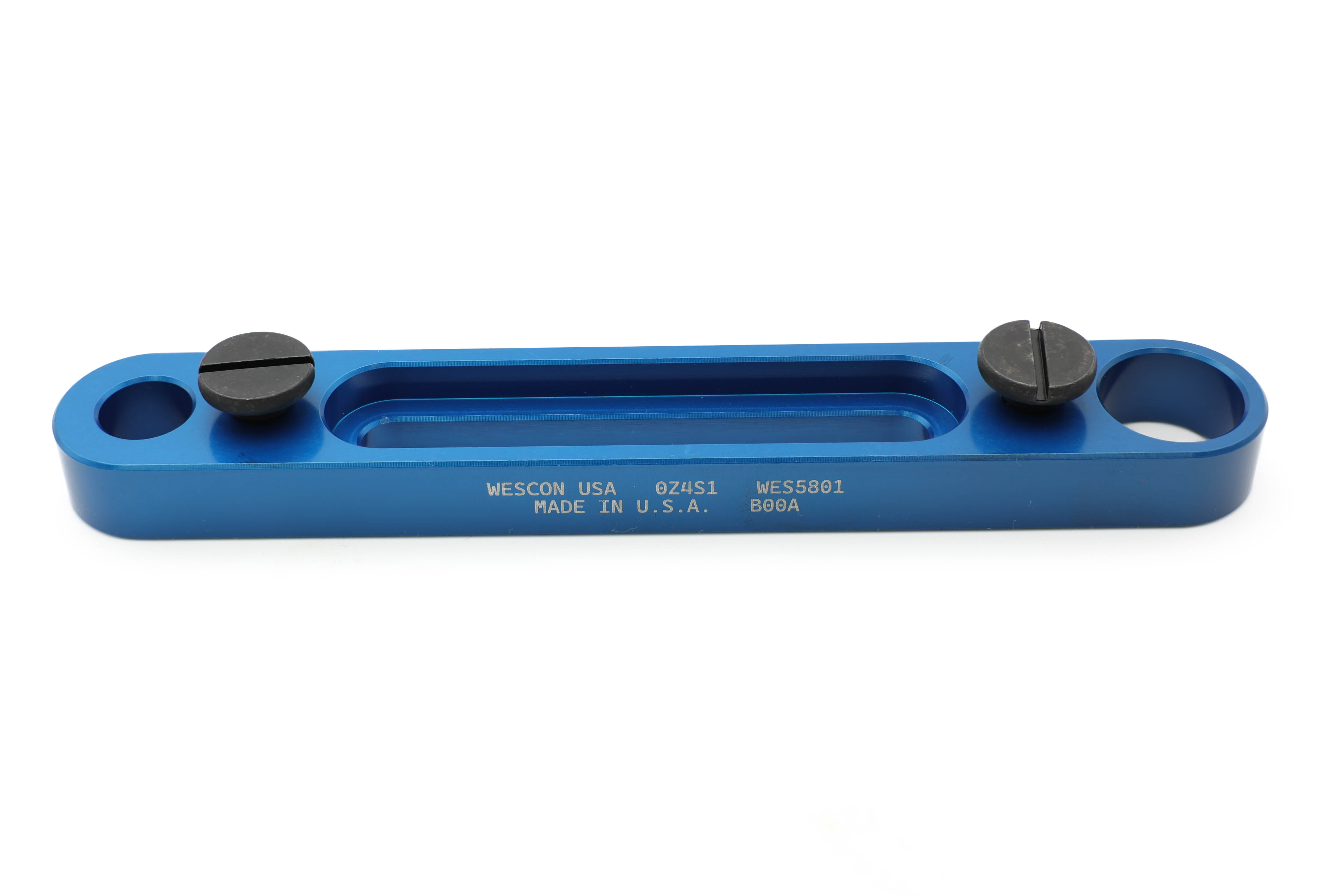
Double ended (WES5801, WES5901). One end takes the small bushing, the other end the large one. Two sizes, one bar, one less tool in the kit.
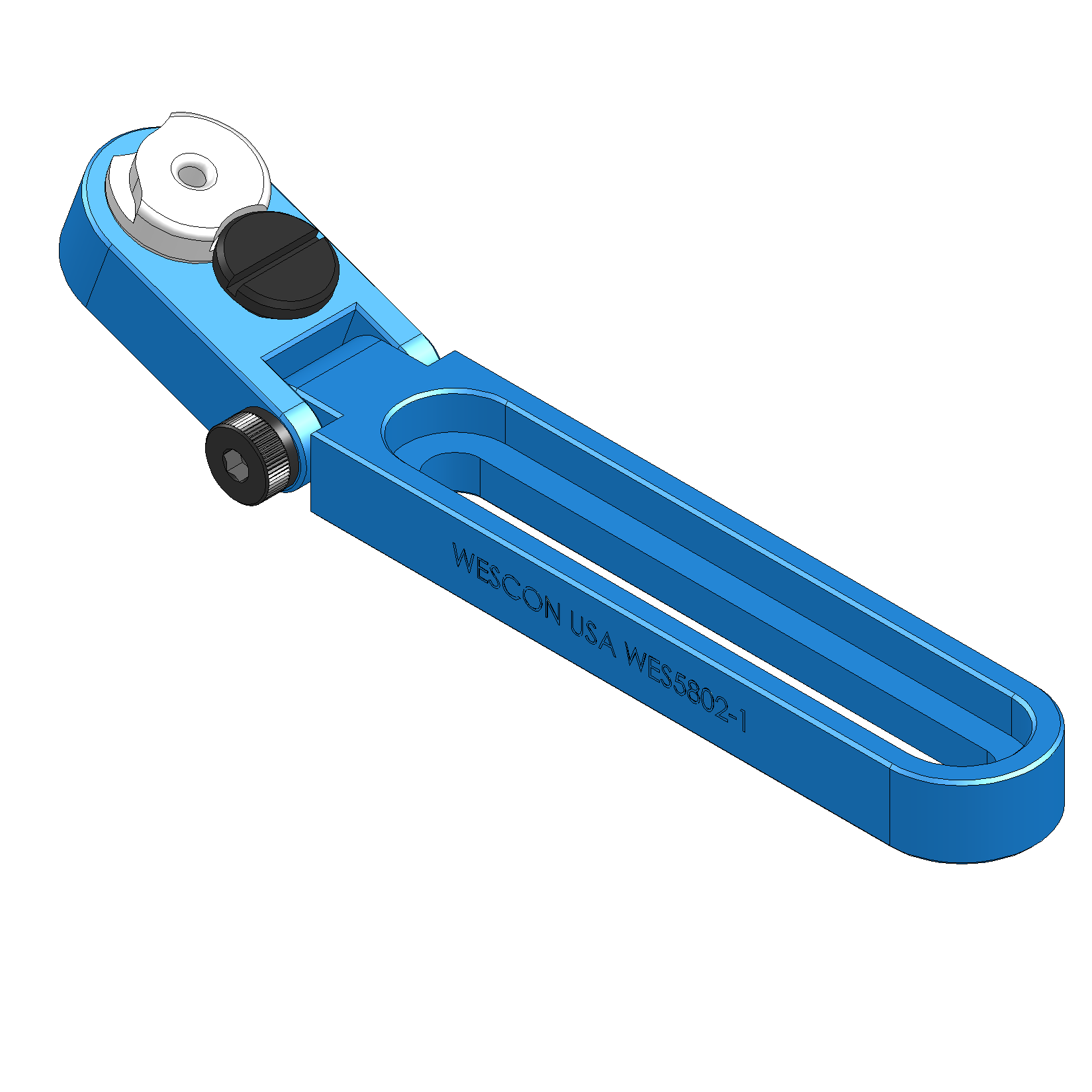
Up-down swivel head (WES5802, WES5902). The head tilts, so the bushing stays square to a curved skin or an angled surface while the bar clamps flat to the structure next to it. Good for contoured panels and tight spots near flanges.
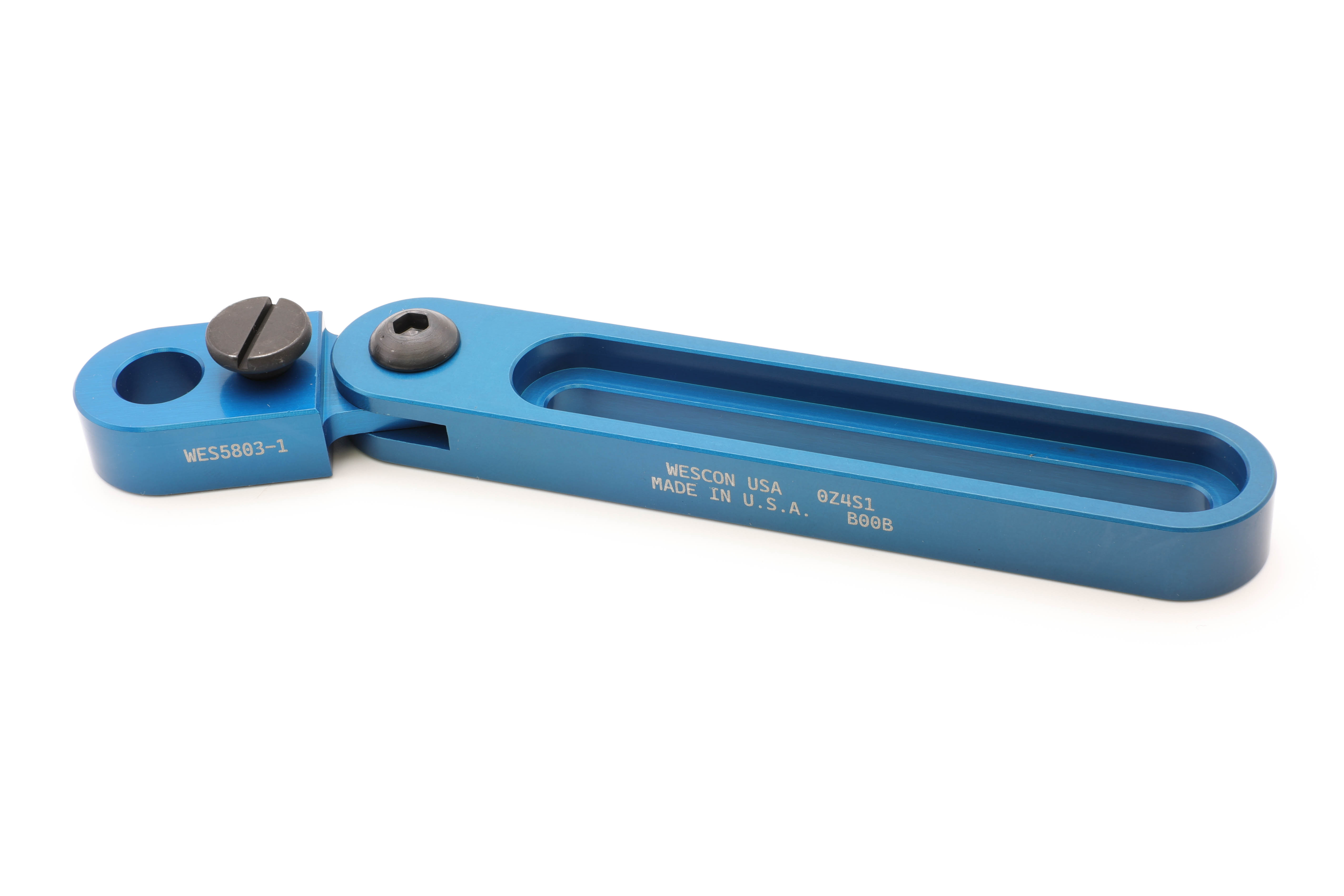
Left-right swivel head (WES5803, WES5903). The head pivots side to side to center the bushing over a hole that is offset from the line of the clamping slot.
Which bushing goes in
The bar is only half the tool. The bushing sets the hole size, and it has to fit the bar.
The WES5800 family takes a 1/2 inch or 3/4 inch outside diameter SF bushing. Wescon's WESSF slip/fixed renewable bushings come in both. The 1/2 inch OD bushings run from a #40 drill (0.098 inch) up to 5/16 inch, with letter sizes and metric bores from 2.5 mm to about 7.9 mm in between. The 3/4 inch OD bushings pick up where those stop, 13/32 inch through 1/2 inch. If you already own SF bushings from another maker in those two diameters, they fit. WESSF-32-16-30, for example, is 1/2 inch OD (32 thirty-seconds), 1 inch long, with a #30 bore.
The WES5900 family takes threaded bushings. The 3/8-16 bar takes WES5501 threaded bushings, bores from 1/16 inch through letter F (0.257 inch). The 1/2-13 bar takes WES5502 threaded bushings, 3/32 inch through 5/16 inch plus the same metric run. Any 3/8-16 or 1/2-13 OD threaded bushing screws in, not only ours.
Pick the bore for the drill you are about to run, not the finished hole. Builders who step a hole up through intermediate sizes and ream the last step use a bushing for each size.
Choosing a swivel
A plain bar clamps flat and holds the bushing in line with the slot. That covers most holes. The swivel heads are for the ones it does not.
The up-down swivel (WES5802 for SF bushings, WES5902 threaded) tilts the head. It is for drilling at an angle to the surface the bar clamps to, on a curved skin, or over a hole that sits on a different plane than the clecos. The head holds the bushing steady at the angle you set.
The left-right swivel (WES5803 for SF bushings, WES5903 threaded) pivots the head sideways. It is for offset drilling, when the hole sits to one side of the line of the slot and the clamp points cannot move.
Look at where the clecos will go and where the hole is. If the hole sits at a different angle or height than the clamp points, take the up-down. If it sits off to one side, the left-right. Flat and in line, the plain bar is enough.
What to look for
Material and weight matter, especially if you're holding the bar up for any length of time. Wescon bars are anodized aluminum, about half a pound. A bar that takes SF bushings will accept bushings from any maker. A bar with a proprietary bushing won't.
Wescon adjustable drill bars are made in USA and ship in about four days. See the full list on the drill bars catalog page, and the SF slip fit bushings and threaded drill bushings that go in them.
Read next: the same bushings in a drill guide
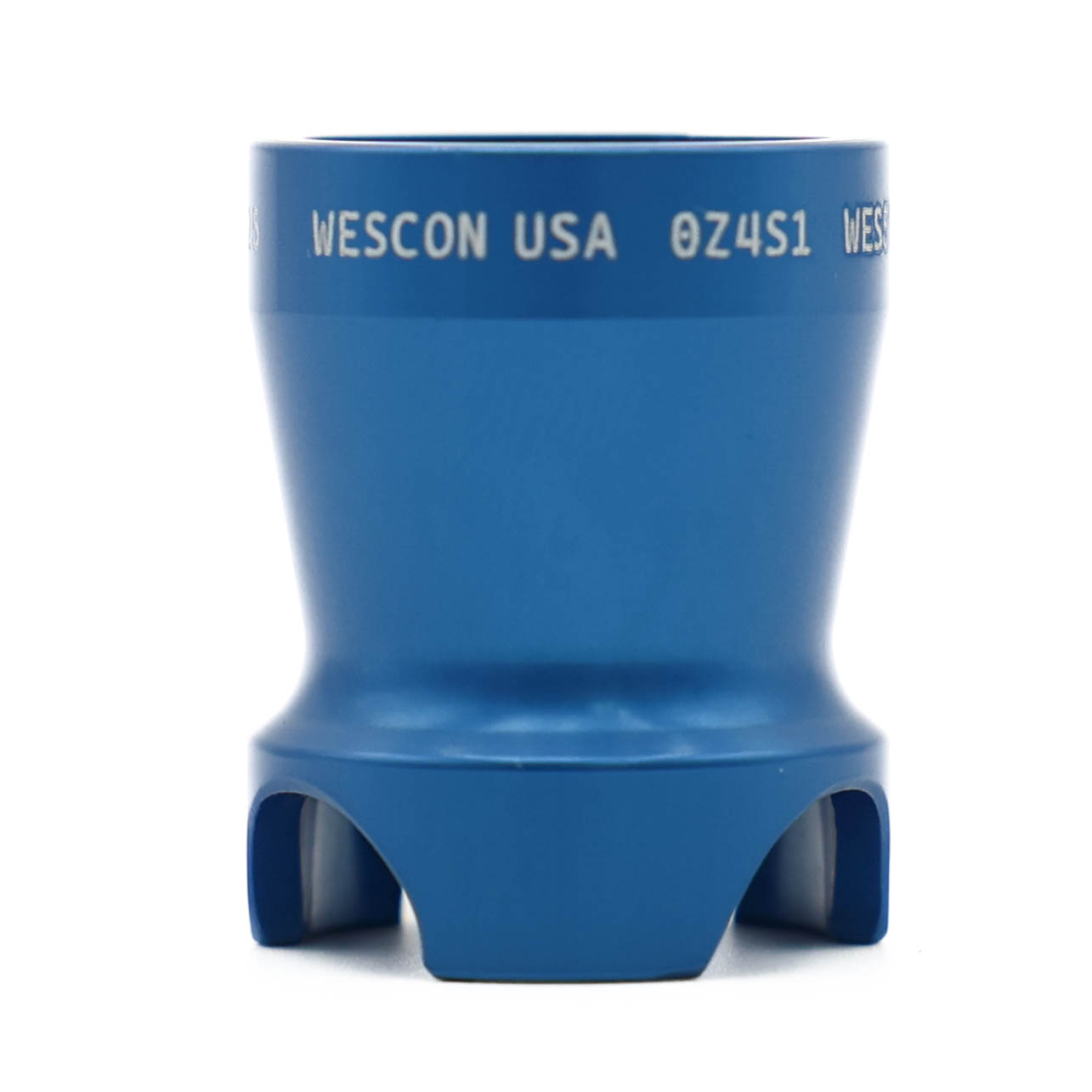
The 1/2 inch SF bushings that go in a WES5800 drill bar also fit Wescon's egg cup drill guides and dog bone drill guides, so one bushing set covers both tools. Egg cup guides stand the bushing up for 90 degree drilling straight into sheet metal, while dog bone guides are held in the hand to guide the drill wherever the hole is.


Wescon is a brand of GI Corporation. Our products are sold in the European Union through GI Europe B.V. (KVK# 99685124) based in the Netherlands.

